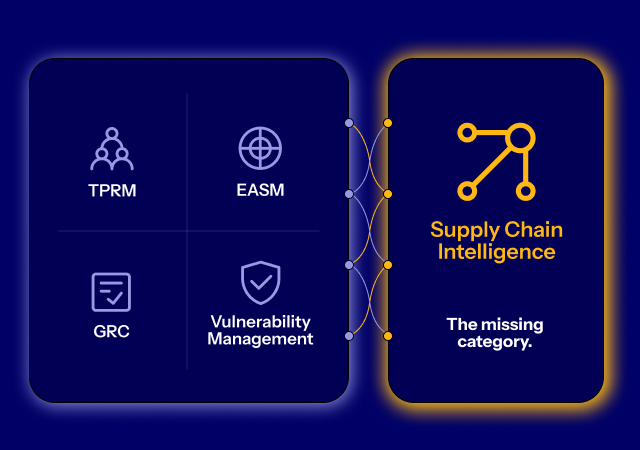

Digital Proximity ranks external assets and supplier-linked exposure by how closely they connect to critical systems, helping security leaders focus remediation on risks with the greatest potential impact.
A forgotten subdomain, an unmonitored SaaS instance, a vendor’s misconfigured API... These unknown assets and supplier-linked systems don’t wait for your next quarterly scan; they create residual risk that traditional cycles miss.
What’s missing isn’t more scanning, pen testing, or vendor risk assessments. It’s continuous visibility with context: the ability to say not just what exists but how close it is to what matters most. That’s Digital Proximity™ (Patent Pending), and it’s the difference between chasing alerts and making confident risk decisions.
The five shifts that actually change outcomes
1) Real-time external asset discovery
Move from “What did we find last quarter?” to “What changed today?” Focus on the long tail: domains, subdomains, APIs, ephemeral cloud, and SaaS sprawl.
Outcome: fewer surprises, faster triage.
2) Supply-chain & third-party visibility
Don’t wait for a vendor to self-report. Independently discover assets and misconfigurations that point back to you, and monitor tier-1 suppliers continuously.
Outcome: fewer indirect blasts.
3) Continuous attack-surface prioritization
Flat scoring systems and security rating tools treat every exposure as equal. But cyber risk doesn’t work that way. With Digital Proximity™ (Patent Pending), you can prioritize by exposure level, asset criticality, and blast radius.
Outcome: a measure of how close each risk is to sensitive systems, with faster time-to-risk-decision.
4) Integration with governance & response
Risk data doesn’t help if it sits in PDFs. Push findings into SIEM, SOAR, or GRC systems, auto-generate tickets, and route them straight to owners.
Outcome: faster alert-to-fix cycles without adding new consoles.
5) Regulatory & audit support
Regulators and boards don’t want more jargon. They want evidence: exposure trendlines, inventory snapshots, remediation timelines, defensible logs. Continuous oversight makes compliance less scramble, more byproduct.
Outcome: smoother board readouts and regulator interactions.
What to show the board (and why they’ll care)
Map risk in digital proximity terms: not just “what exists,” but how close each exposure sits to crown-jewel data and critical processes. Pair this with a short scorecard including:
- % of inventory updated on schedule
- Ratio of known-to-unknown assets
- Vendor coverage across tier-1 partners
- Median time-to-risk-decision
- Mean time to remediation for high-exposure assets
These are metrics regulators already expect to see, and they’re numbers that tell a story executives can actually understand.
The pragmatic path
- Day 0–30: Start agentless from your primary domains; baseline assets and quick-win exposures. (A light-touch, domain-only kickoff lowers friction.)
- Day 31–60: Add tier-1 vendors; push enriched alerts into SIEM/SOAR; hold weekly exposure reviews.
- Day 61–90: Establish executive scorecards and audit trails; shift to continuous prioritization tied to business criticality.
This is a phased, pragmatic way to move from static snapshots to living visibility. You don’t need “complete” discovery (nobody has it); you need continuous discovery with context.