
European cybersecurity is becoming central to digital sovereignty, resilience and accountability as regulation tightens and digital ecosystems grow more interconnected across the EU.
The conversation around cybersecurity in Europe is no longer about individual products, incidents, or compliance requirements. It’s about how Europe builds, governs, and sustains digital resilience in a world of growing interdependence, regulatory pressure, and accelerating technological sprawl.
Against this backdrop, ThingsRecon recently obtained the Cybersecurity Made in Europe label by the European Cyber Security Organisation (ECSO), issued by Security Delta (HSD). We see this recognition as an invitation to play a more active role in Europe’s cybersecurity ecosystem, contributing not just technology, but perspective on how modern risk should be understood and managed.
A signal of where European cybersecurity is heading
The ECSO label recognises cybersecurity companies whose solutions are developed in Europe and aligned with high standards of transparency, reliability, and regulatory responsibility. More importantly, it reflects a broader European ambition: to strengthen a resilient, autonomous cybersecurity ecosystem capable of supporting governments, enterprises, and critical infrastructure alike.
This ambition has been echoed at the highest levels. In her recent address at the World Economic Forum, European Commission President Ursula von der Leyen spoke about the need for Europe to act more decisively as “EU Inc” when it comes to competitiveness, sovereignty, and digital leadership. This includes “a single and simple set of rules that will apply seamlessly all over our Union. So that business can operate across Member States much more easily.”
In cybersecurity, that message is especially timely.
Regulation is rising, but clarity is lagging
Frameworks like NIS2, DORA, and GDPR are reshaping expectations around accountability and risk management. Yet in practice, many organisations struggle with a more fundamental issue: they lack a clear, up-to-date understanding of their external exposure.
Modern organisations operate across sprawling digital ecosystems:
- third-party platforms
- cloud services
- APIs and integrations
- suppliers and subcontractors
- inherited infrastructure that was never fully disconnected
Risk no longer sits neatly inside the perimeter. It lives in connections, and those connections change constantly.
At ThingsRecon, this is the reality we’ve built for from day one. Our focus on external exposure and digital supply chain intelligence is driven by a simple observation: you cannot manage, prioritise, or explain risk if you don’t understand how your organisation is actually connected to the outside world.
Turning visibility into action
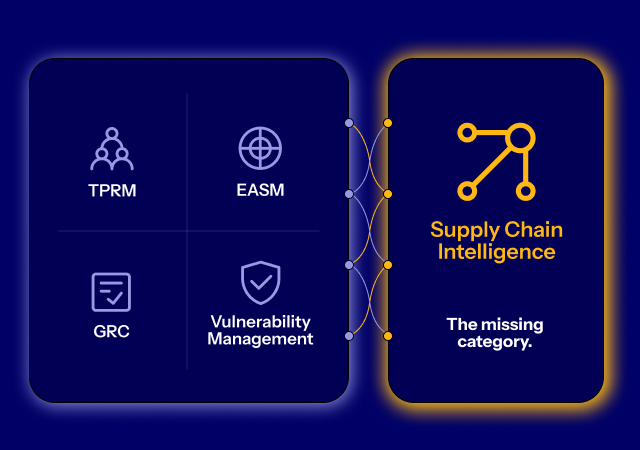
Supply Chain Intelligence at ThingsRecon is designed to move beyond static inventories and generic scoring. By continuously discovering externally connected assets (from domains and APIs to certificates, scripts, web applications, and supplier infrastructure) we help organisations build a living map of their digital ecosystem.
Crucially, risk is prioritised based on Digital Proximity (Patent Pending), our proprietary measurement of how directly an exposure interacts with an organisation’s most critical systems. This allows security teams to focus on what matters most to their business, rather than treating all findings as equal.
This approach reflects a broader shift we believe Europe must make: from abstract notions of risk to evidence-based, context-aware decision-making that leadership teams can understand and act on.
Building the right guidance around the mission
As our role within the European cybersecurity landscape grows, so does the importance of perspective and governance. Over the past year, we’ve expanded the ThingsRecon Board of Advisors to reflect the breadth of challenges (technical, commercial, legal, and societal) that modern cybersecurity companies must navigate.
We’re proud to be advised by:
- Jordan Lawrence, CEO of Damisa, a seasoned company builder with over two decades of experience scaling technology businesses and building products customers trust in complex markets like cybersecurity.
- Patrick Rietbroek, who brings deep expertise in legal strategy, corporate structuring, and M&A, supporting companies through critical growth phases with a sharp focus on risk, governance, and long-term value creation.
- Fergus Hay, Founder & CEO of The Hacking Games, whose work spans cybersecurity talent development, media, growth strategy, and venture. Fergus brings a unique perspective on how the next generation of defenders is inspired, trained, and empowered.
Together, they help sharpen our thinking as we scale, not just as a company, but as a responsible participant in the cybersecurity ecosystem.
From company growth to national responsibility
That responsibility was underscored recently when ThingsRecon partnered with the Government of Albania to help secure the country’s critical digital infrastructure.
Protecting a nation’s external exposure and supply chain dependencies is a fundamentally different challenge from securing a single enterprise. It requires visibility across borders, clarity across stakeholders, and trust in the tools and partners involved.
For us, this engagement represents what European cybersecurity can, and should, aspire to: practical collaboration between technology providers and public institutions to strengthen resilience at scale.
The Cybersecurity Made in Europe label is not a trophy on the shelf. It’s a marker of intent, a commitment to building security technology that reflects European values, realities, and responsibilities.
As regulatory expectations grow and digital ecosystems become more complex, we believe the next chapter of cybersecurity will be defined not by louder claims, but by clearer understanding.