
A useful TPRM comparison should examine supplier discovery, external evidence, continuous monitoring and relationship-specific risk, alongside workflows, questionnaires and security ratings.
Most organizations evaluating third-party risk management software in 2026 are doing so because something already went wrong, or because they can feel the gap. A vendor was breached and the security team had no idea how exposed they were. A new SaaS tool was quietly integrated by a business unit and nobody in security caught it. A score looked fine on paper right up until it wasn't.
The TPRM market is crowded and vendor messaging is nearly identical. Every platform promises visibility, continuous monitoring, and risk reduction. What they don't disclose upfront is what they actually measure, what they require from you to work, and where they stop.
What most TPRM tools actually do
The dominant model in third-party risk management is still the questionnaire. A vendor fills out a form, someone reviews it, a risk rating gets assigned, and the record sits in a database until the next annual review cycle. More sophisticated platforms layer scoring models on top of this, pulling in external signals like certificate data, open ports, and historical breach records to generate a letter grade or numeric score.
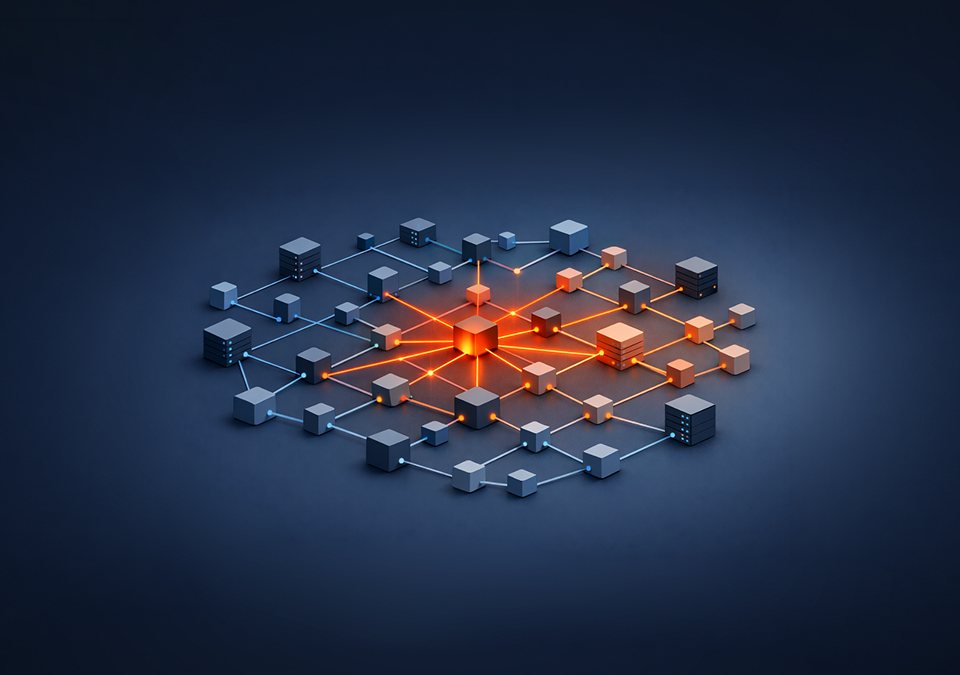
That model made sense when supply chains were simpler. The problem in 2026 is that the digital supply chain doesn't look like a vendor list anymore. It looks like a mesh of APIs, SaaS integrations, CDN dependencies, third-party scripts, and cloud service relationships that no procurement team ever approved and no questionnaire ever captured.
Ratings vs. intelligence
Vendor scores are a proxy. They compress a complex technical reality into a single number so procurement teams can make decisions quickly. That compression is useful in specific contexts, but it creates a critical blind spot: a score tells you how a vendor looked at a point in time against a set of external indicators. It doesn't tell you how that vendor connects to your infrastructure, which connections are active, or what a compromise of that vendor would mean for your environment.
Supply chain attacks have shifted from theoretical to routine. The question security teams need to answer isn't "does this vendor have a good score?" It's "if this vendor is compromised tomorrow, what does the blast radius look like for us?"
That requires intelligence, not ratings. Intelligence means knowing which vendors are digitally connected to your organization, through which pathways, with what level of exposure — including connections that bypass your vendor management system entirely.
Five capabilities to look for in a modern supply chain risk platform
Continuous monitoring vs. periodic assessments
Periodic assessments create a false sense of currency. A vendor that passed an assessment six months ago may have introduced new exposures since. A newly onboarded SaaS platform that bypassed formal procurement doesn't appear in your assessment queue at all.
Continuous monitoring solves both problems, but only if it's monitoring the right things. Continuous scoring updates on a static vendor list isn't the same as continuous discovery across an evolving digital ecosystem. The former catches configuration drift in known vendors. The latter catches new relationships, shadow integrations, and emergent attack paths before they're exploited. Operationally, the model shifts from a review calendar to a live feed.
Supply chain discovery vs. vendor self-reporting
Vendor self-reporting — questionnaires, attestations, certifications — asks vendors to describe their own security posture. The limitation is that vendors have an incentive to present themselves favorably, and even well-intentioned self-reporting misses gaps that vendors don't know they have.
Supply chain discovery works differently. Instead of asking vendors to describe their posture, it observes what's externally visible: DNS records, certificate chains, API endpoints, cloud infrastructure signals. These produce an independent picture of a vendor's digital footprint that doesn't depend on anything the vendor chooses to disclose. At scale, this matters: getting accurate, current questionnaire responses from thousands of digital suppliers is operationally impossible. Passive discovery doesn't require vendor cooperation at all.
Where ThingsRecon fits in the landscape
ThingsRecon is not a TPRM platform in the traditional sense. It doesn't manage questionnaire workflows, track certification renewals, or generate compliance reports. ThingsRecon addresses a prior question: what does your real digital supply chain look like, and where is it exposed?
The platform combines external attack surface management with supply chain intelligence. Starting from a domain name, it discovers the full digital ecosystem connected to an organization — including vendors, API integrations, and third-party components that wouldn't appear in any vendor management system. It then maps how those relationships connect to your infrastructure and surfaces specific exposures that create real attack paths.
Organizations evaluating SecurityScorecard alternatives or BitSight alternatives should ask whether they need better scoring of a known vendor list, or whether they need to understand the full scope of their digital supply chain first. Organizations that discover they have two to five times more digital supplier relationships than they've documented are not well served by a more sophisticated scoring model applied to an incomplete picture.
What to ask before you sign
Before committing to any supply chain risk platform in 2026, these questions separate compliance management from vendor scoring from supply chain intelligence:
The answers reveal which category a platform actually belongs to: compliance management, vendor scoring, or supply chain intelligence. Each has a legitimate use case. The problem is buying one while needing another.