
Shadow IT is any app or vendor connection running without security's knowledge. In large organizations it usually comes from disconnected business units rather than rogue employees, and unmanaged assets sit outside every existing control because nobody knows they exist to manage.
What is Shadow IT?
How does Shadow IT build inside a large company?
A business unit needs a tool, signs up for it, and starts using it immediately because waiting for central approval is slower than the work itself. No one reports it, because nothing in the process requires that. Multiply that across dozens of teams and the gaps compound fast.
Shadow IT exists due to several reasons:
- Accelerated digital transformation and cloud dependency
- The move to remote work, often including personal devices
- The need to scale operations fast in the era of AI
One recent third-party risk rollout for a global company built from dozens of semi-independent agencies makes the pattern concrete. Ahead of the first discovery scan across the company's roughly 20,000 domains, the team responsible for vendor risk already expected two things: that the scan would surface the vendors those agencies onboard without telling anyone, and that the first list would be long enough to feel overwhelming.
Their read on how this happens was straightforward. One agency signs a vendor and ten others start using the same tool without telling anyone, because nothing forces that information to travel between teams. A vendor gets marked for offboarding, and only then does someone discover a different part of the business is still actively connected to it.
What are the security risks of shadow IT?
A vendor becomes a liability simply by staying connected after everyone assumes the relationship ended. ThingsRecon's research on shadow assets groups this into categories that show up again and again, including forgotten subdomains and integrations that outlived the project that created them. None of those show up in a vendor questionnaire, because a questionnaire only covers relationships someone remembered to disclose. A lot of real incidents start exactly this way: one outdated or overlooked vendor connection becomes the way an attacker reaches a much larger environment.
Regulation is starting to catch up with this gap too. NIS2's asset identification requirements assume a company can produce an accurate account of what it runs and what it depends on. That is precisely the account most shadow IT problems make impossible to produce from an internal spreadsheet alone.
How many unknown assets are typically hiding in a company's environment?
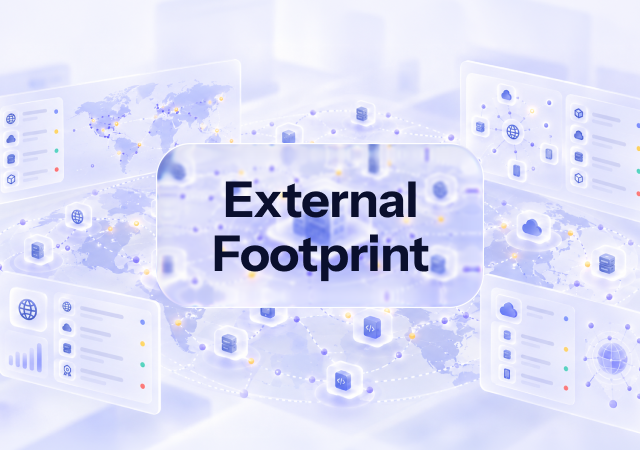
More than most security teams expect, and often by a wide margin. ThingsRecon discovery scans regularly turn up domains and applications that were never part of any official inventory, at a scale that changes how a team prioritizes its whole vendor risk program.
A recent discovery engagement for a large, multi-brand organization makes the scale concrete. Security had inventoried around 570 known domains before the scan started. The scan turned up 736 active ones. It also surfaced 211 applications with meaningful attack surface, including one single application with 270 open input fields that had never been flagged for review, plus 675 supplier relationships feeding into the same environment.
None of it came from a recent acquisition or a policy failure. It came from years of ordinary growth with no one keeping a running count, which is exactly what most vendor risk programs still overlook.
How can security teams find shadow IT before it becomes an incident?
Not through a single audit. Shadow IT keeps regenerating as teams change vendors and quietly retire old ones, so finding it once tells you almost nothing six months later. The only approach that keeps working is continuous, outside-in discovery that rescans the company's real footprint on an ongoing basis, not a point-in-time questionnaire.
This is the part of the problem that questionnaires were never built to solve. A vendor risk questionnaire only reports what the person filling it out remembers or chooses to disclose. Continuous discovery works from the outside in instead, scanning a company's domains and supplier connections the way an attacker would, and building a live map of who's actually connected rather than who was declared during onboarding. ThingsRecon runs this kind of scanning across attack surface and supply chain together, so a newly discovered vendor connection also gets scored by how close it actually sits to critical systems, not by a generic rating. That distinction, proximity over a flat score, is usually what determines whether an unknown asset is worth an afternoon of attention or an incident response call.
What capabilities do you need to discover shadow IT across your environment?
Three capabilities tend to separate a shadow IT program that works from one that produces a spreadsheet nobody updates.
- Continuous monitoring and scanning, so hidden assets and cloud instances get surfaced automatically instead of depending on someone remembering to check.
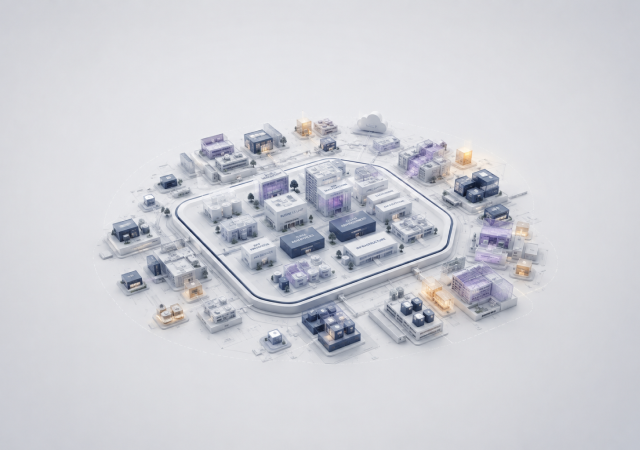
- A centralized view of where digital assets sit, ideally broken down by cloud provider, geography, and business unit, so a global organization can see where risk concentrates rather than treating every subsidiary the same way.
- Analysis that scores each asset by actual risk rather than by presence alone, so remediation goes to the exposures closest to critical systems first, not just the easiest ones to close.
What should a shadow IT policy cover?
A shadow IT policy works when it reads as protective rather than restrictive. It needs an owner, a way to monitor and enforce it, clear accountability for employees, and defined exceptions for tools that get approved case by case, so people have a legitimate path instead of a reason to hide what they are using.
A workable policy covers the same ground regardless of company size:
- What the policy is for, and who it applies to.
- Who owns it, and who is accountable for enforcing it.
- How compliance gets monitored, and what happens when it is not followed.
- What exceptions exist, and how someone requests one.
Once an asset is found, it needs a category, not just a flag. Sorting shadow IT into a small number of buckets keeps the next decision simple:
- Sanctioned: reviewed and approved, no different from anything else already running in the environment.
- Not sanctioned, not dangerous: it does not meet policy, but it is not creating meaningful risk either, worth revisiting later rather than blocking today.
- Not sanctioned and dangerous: needs action now, whether that means replacing it, restricting it, or shutting it down.
For anything landing in the last two categories, a short set of questions does most of the real work:
- What business need does this asset actually serve?
- Does an already-approved tool cover that same need?
- Does the benefit to the person using it outweigh the risk it introduces?
What are practical steps to reduce shadow IT?
Reducing shadow IT mostly comes down to giving employees a faster legitimate path than going around IT. In practice that means better tooling, stronger basics, sharper prioritization, real training, and ongoing measurement, treated as one connected effort rather than five separate initiatives.