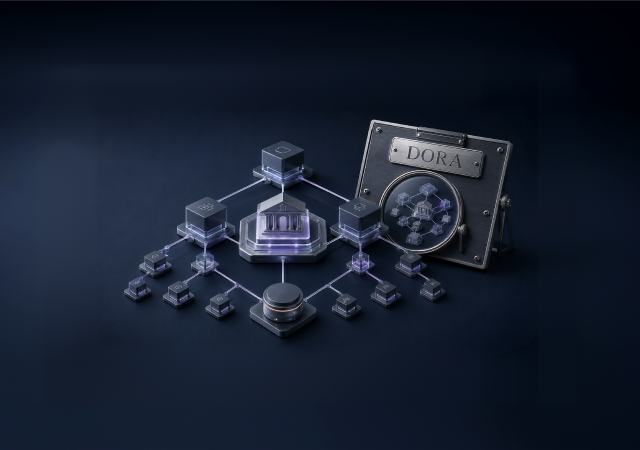


DORA and NIS2 require more than questionnaires. This guide explains how to assess third-party risk tools based on supplier discovery, evidence, monitoring and operational resilience.
Look for a tool that filters findings by what's material to your regulatory-defined critical services, not a flat vendor score. It should map supplier dependencies to specific DORA and NIS2 articles, run continuously instead of annually, and plug into the GRC or ticketing workflow your team already uses. Everything else is secondary.
Every TPRM vendor now claims to be DORA-ready or NIS2-aligned. Most of that is a compliance page bolted onto a product built years before either regulation existed. The actual test is simple: does the tool tell you what's going to matter to a regulator, or does it just generate more alerts for your security team to triage?
Materiality beats a flat risk score
A security team we worked with during a platform evaluation put it plainly: they didn't want another feed that alerts on everything. Their existing monitoring tools had thresholds set so high that findings had become background noise, and nobody trusted the scores enough to act on them. What they wanted instead was a shortlist: which findings are actually material to the services that, if disrupted, would breach a regulatory recovery window.
That's the real test for a DORA or NIS2 tool. A supplier rated "C" this quarter doesn't tell a security operations team anything they can act on. A live script from that same supplier running inside a production environment, tied to a service your organization has classified as critical under its own resilience assessment, does.
If a tool can't make that distinction, it's producing dashboards, not evidence.
Mapping findings to specific regulation articles
DORA's third-party provisions aren't a single checkbox:
- Article 28 requires a register of contractual arrangements with ICT providers.
- Article 29 requires an assessment of concentration risk.
- Article 8 requires an inventory of ICT assets and their interdependencies.
A tool worth paying for should show which of your findings speaks to which obligation, so when an auditor or regulator asks for evidence, you have something more specific than a vendor risk score to hand over.
Digital proximity mapping was built around this exact requirement: instead of a generic vendor score, it shows how directly a supplier's systems touch your critical operations, which is closer to what NIS2's asset identification requirement asks for.
Why are regulators pushing back on annual assessments?
Because a once-a-year questionnaire tells you almost nothing about your exposure for the other 364 days. ENISA's technical implementation guidance for NIS2, published in June 2025, requires organizations to keep a live register of in-scope suppliers updated through ongoing risk management activity, not a static annual review.
DORA's third-party oversight provisions expect the same continuous evidence. A tool that only refreshes its picture of a supplier once a year, or once a quarter, cannot produce that evidence, no matter how detailed the report looks the day it's generated.
Most companies still run TPRM on questionnaires and annual self-attestation. Organizations making real progress on this have already moved past that model, and it shows in how fast they can answer a regulator's question.
Concentration risk stopped being theoretical
Article 29 exists because regulators worry about too many financial institutions depending on the same handful of providers. AWS, Microsoft Azure, and Google Cloud together hold more than 70% of the European cloud market.
In November 2025, the EU's supervisory authorities used their DORA powers to formally designate 19 critical ICT third-party providers, including AWS, Google Cloud, and Microsoft, citing exactly this kind of concentration. Dutch regulators had already flagged the risk directly: too many institutions relying on too few suppliers means a single outage doesn't stay contained to one company, just like we saw when discussing the ripple effects of cyberattacks on critical infrastructure.
A tool that only scores your named vendors won't catch this. It needs to see the infrastructure underneath your suppliers too, because that's where concentration risk lives.
Dependency mapping, not a vendor list
The DORA-readiness pitch that holds up under scrutiny isn't about certifications or a checklist on a slide. Real digital operational resilience means being able to answer a specific question: if this supplier's infrastructure went down tomorrow, what exactly stops working, and what's connected underneath it that you didn't know about?
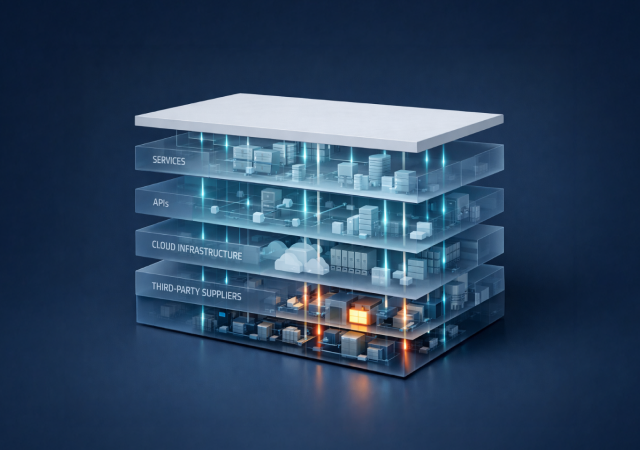
A vendor list with a risk score attached doesn't answer that. What you need is a map of the scripts, certificates, subdomains, and APIs that tie your environment to a supplier's, so you can see the dependency instead of assuming it.
Supply chain security is named explicitly as a NIS2 obligation, not an optional add-on to a broader vendor management program, and the tools built for it should reflect that.
Fit compliance evidence into what your team already runs
The last thing worth checking before you buy: does the tool feed your existing GRC platform, ticketing system, or SIEM, or does it become another login your security team has to remember to check? The criteria above matters more than a dashboard's visual polish, but none of it helps if the findings never reach the people who act on them.
We built ThingsRecon DORA mapping around this same logic: matching what our platform surfaces to the specific articles a regulator will ask about, from asset inventories under Article 8 to concentration risk under Article 29. It's laid out article by article here, if you want to see what evidence-based mapping actually looks like against your own supplier list.
The five-point checklist for a DORA and NIS2 third-party risk tool
A tool should let you tune alerts to what's material to your regulatory-defined critical services, not hand you a flat vendor grade. If it can't tell the difference between a live script on a critical system and generic hygiene noise, your team will end up ignoring it the same way they ignore the tools that already alert on everything.
Findings should tie to the DORA article they affect (asset inventories under Article 8, the third-party contract register under Article 28, concentration risk under Article 29) or NIS2's Article 21 supply chain obligation, not sit behind a generic "compliance-ready" badge. That mapping is what turns a dashboard into evidence when a regulator or auditor asks for it.
ENISA's implementation guidance and DORA's oversight provisions both expect an ongoing, live picture of supplier risk. A once-a-year questionnaire cannot produce that, no matter how thorough it looks the day it's filled out.
The tool should show the scripts, certificates, subdomains, and cloud infrastructure that actually connect you to a supplier, since that's where concentration risk lives too: more than 70% of Europe's cloud runs through three providers, which is exactly why regulators designated them as critical ICT third-party providers in the first place.
Findings need to integrate into your existing GRC, ticketing, or SIEM system, or they won't get acted on. A tool that requires a separate login or data export process is a tool your team will eventually stop checking.